📄 Digital book in PDF · read it on your phone or print it
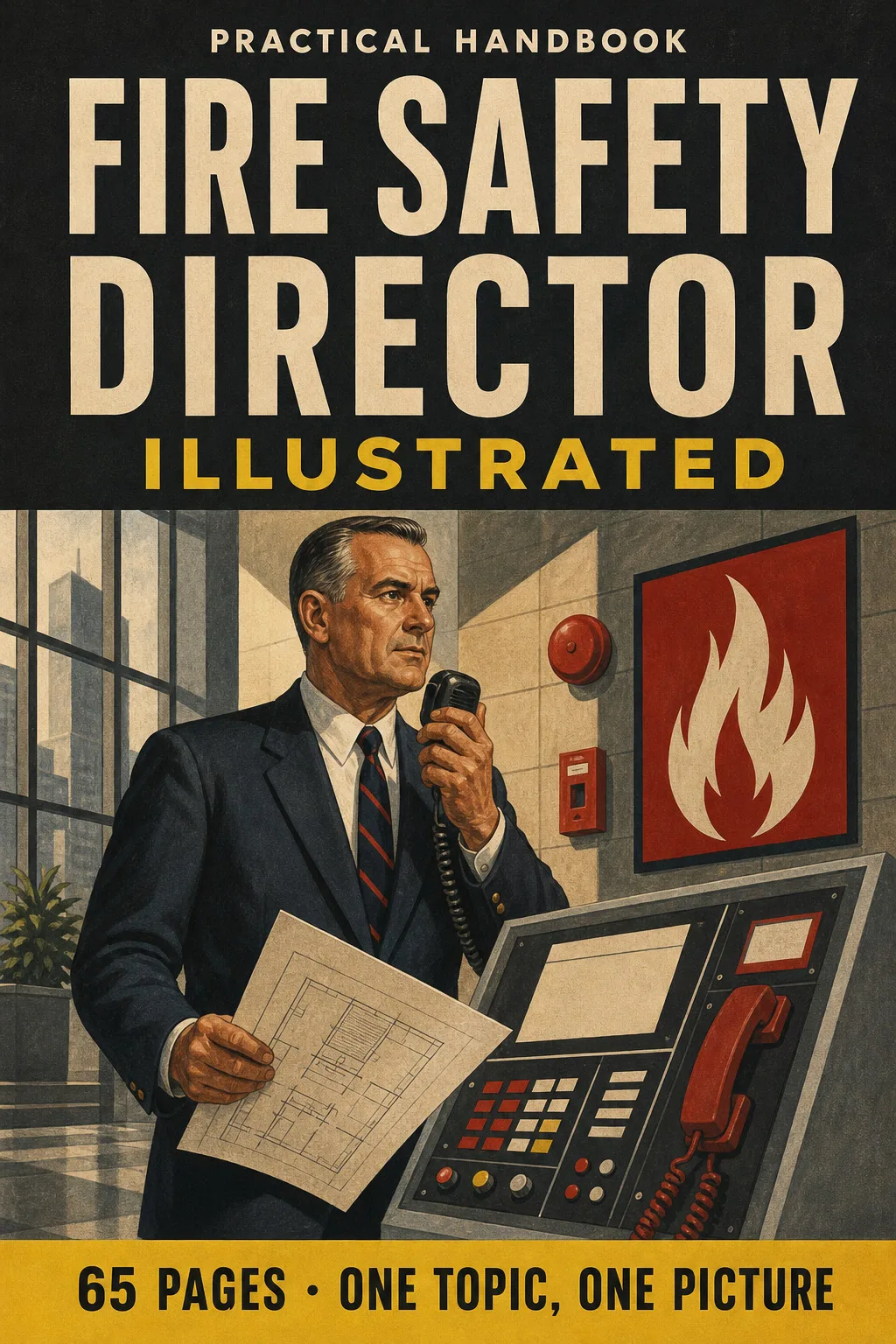
For the written test and the on-site test at your own fire command center. Alarm, supervisory and trouble signals, the voice console, Phase I and Phase II, sprinklers and standpipes, smoke control, in-building relocation and drills. Every topic gets its own page: the drawing first, then what you need to remember. One page shows how to match the book's panel to yours. 65 illustrated pages.
🔒 Secure checkout · PDF by email · 30-day guarantee
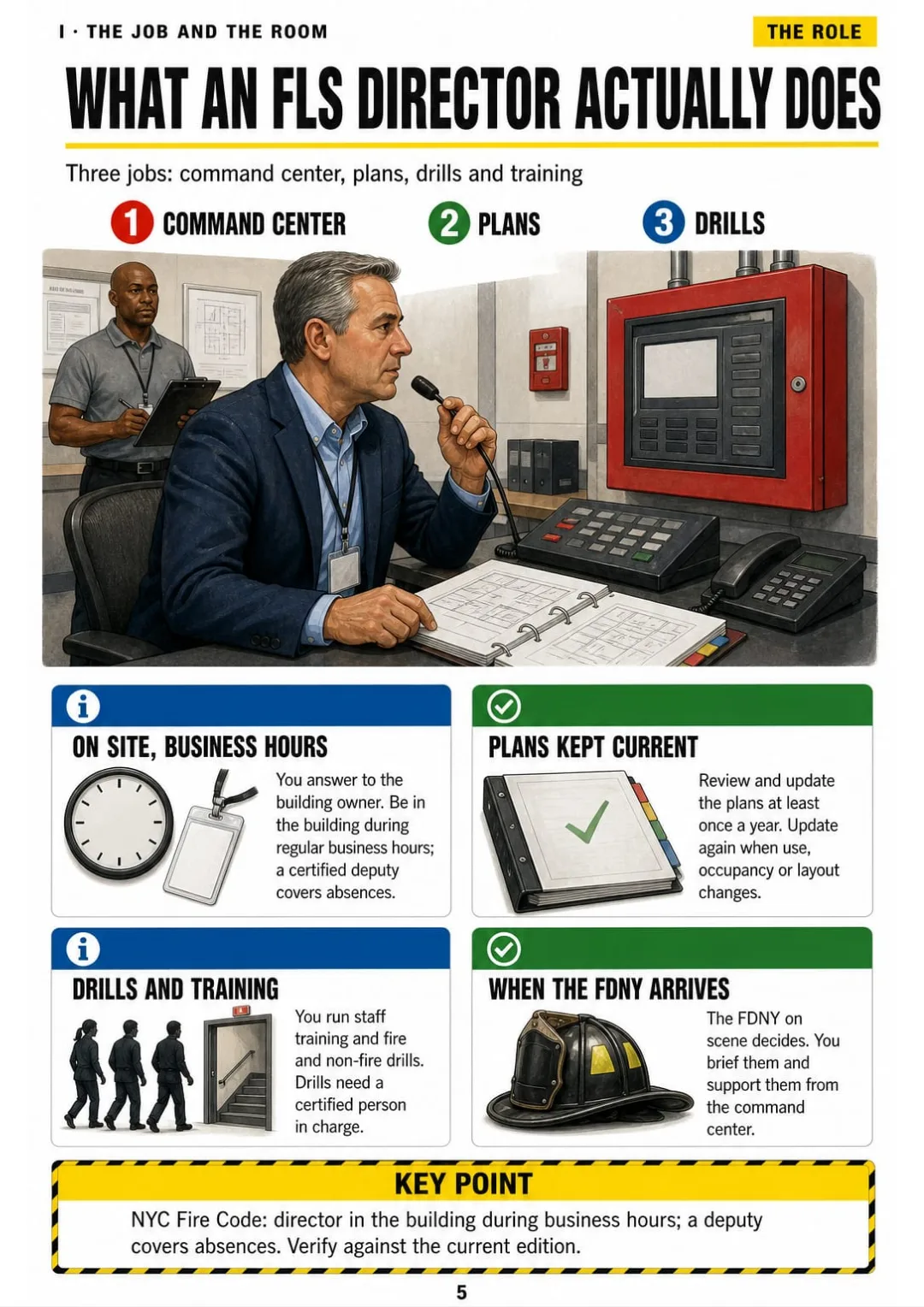
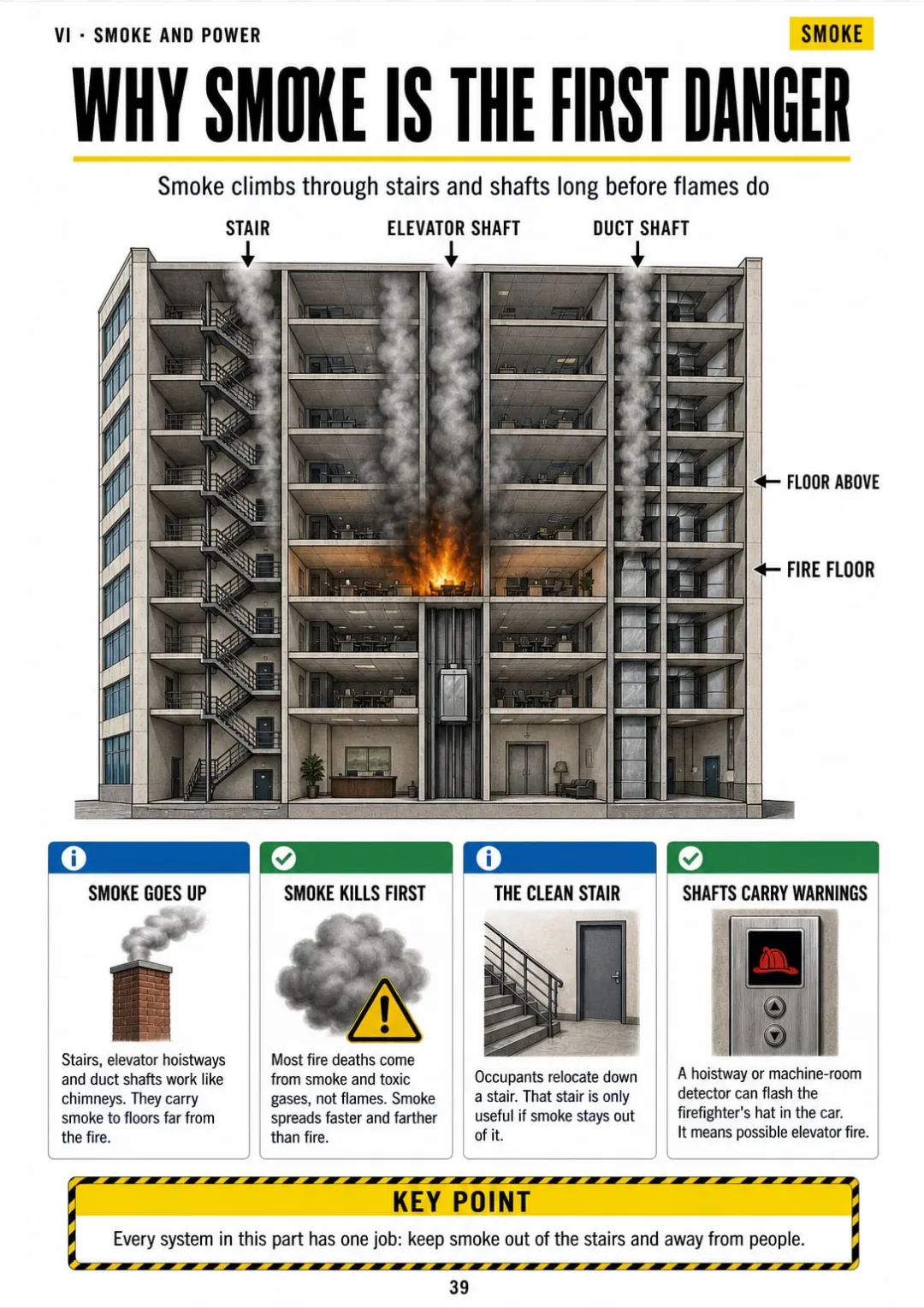
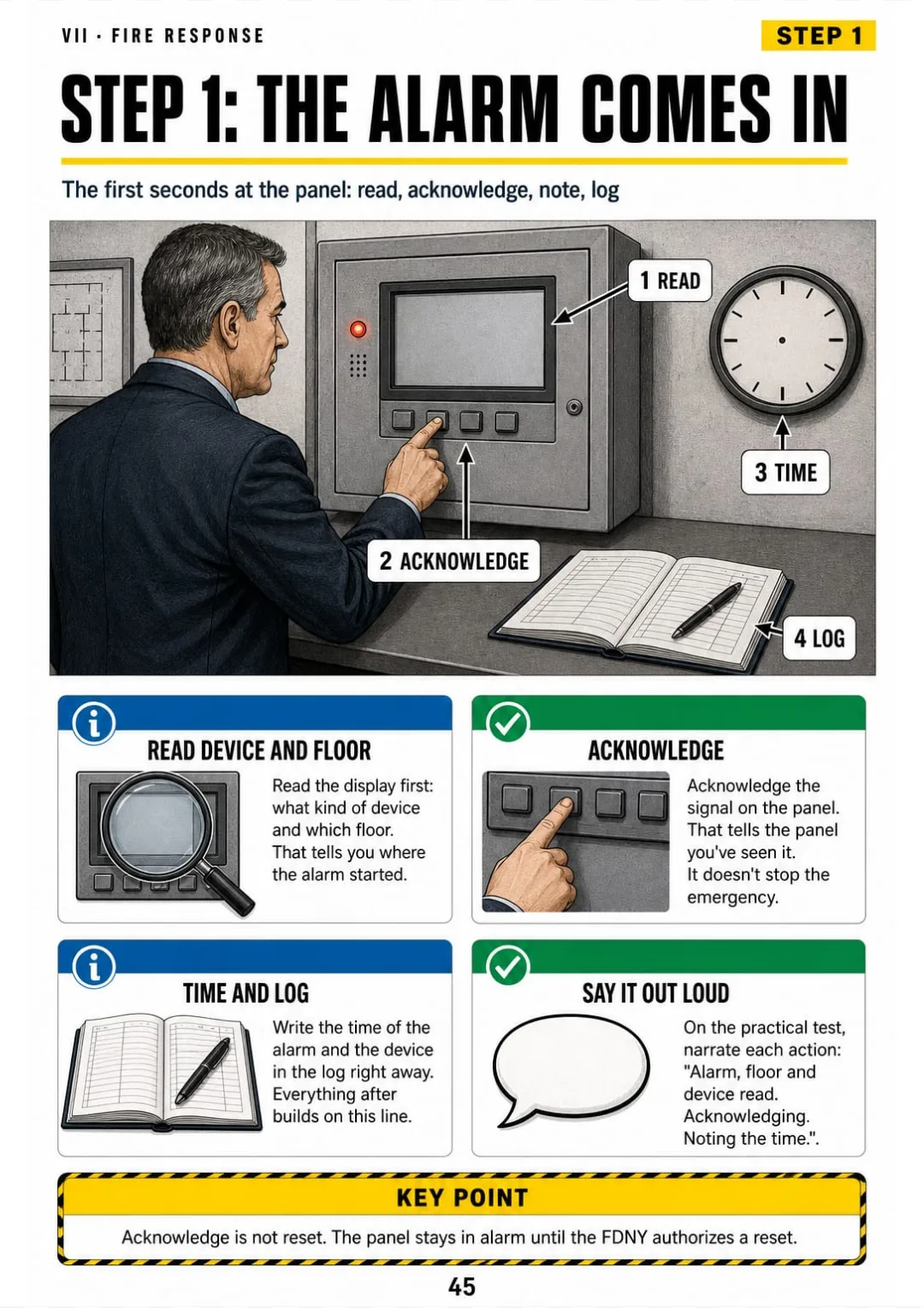
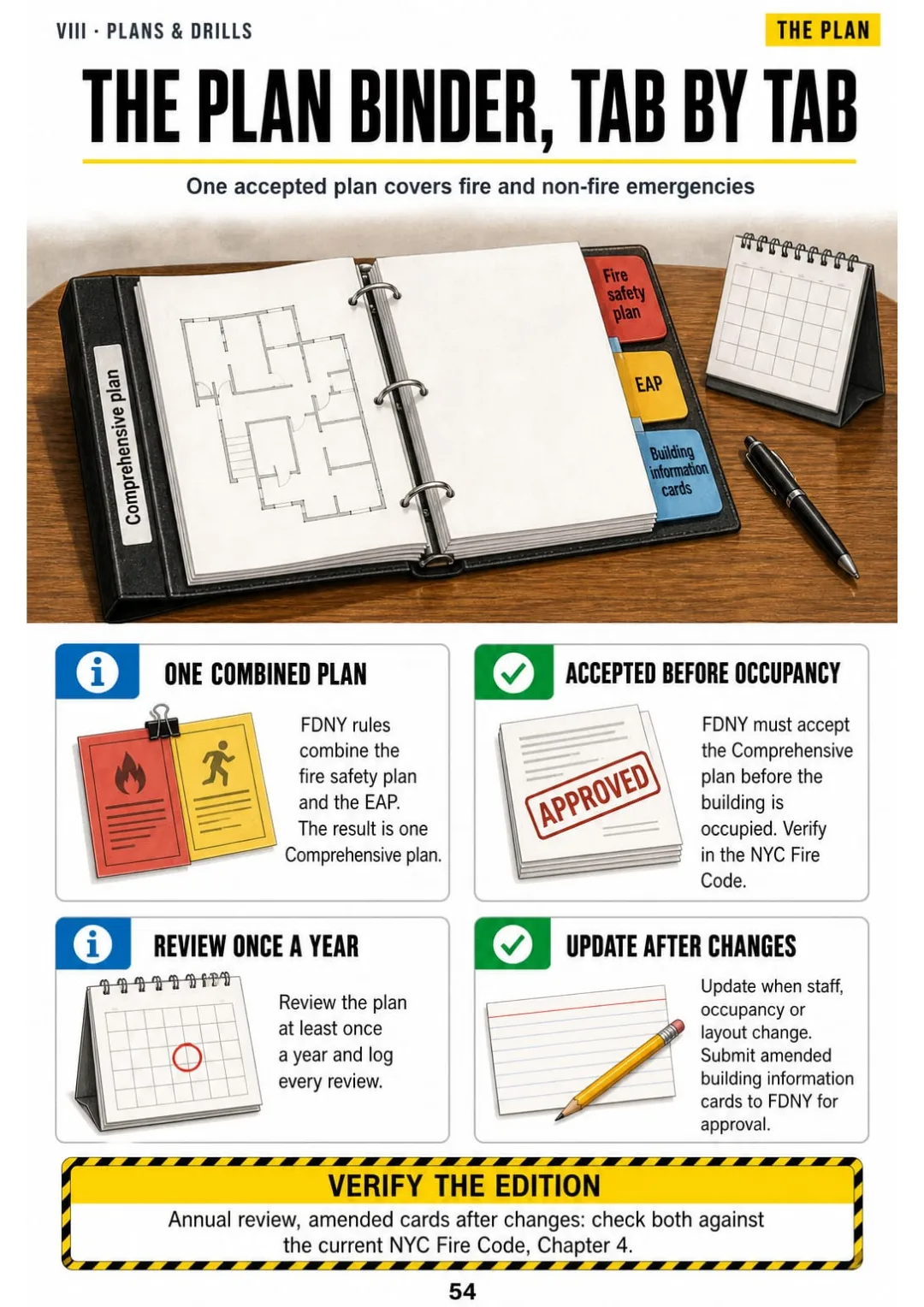
Every page has one big drawing and a box with the steps and numbers you need to know:


Swipe to see more →
These are real pages from the book. The table of contents is the full one: 9 parts and 61 topics.
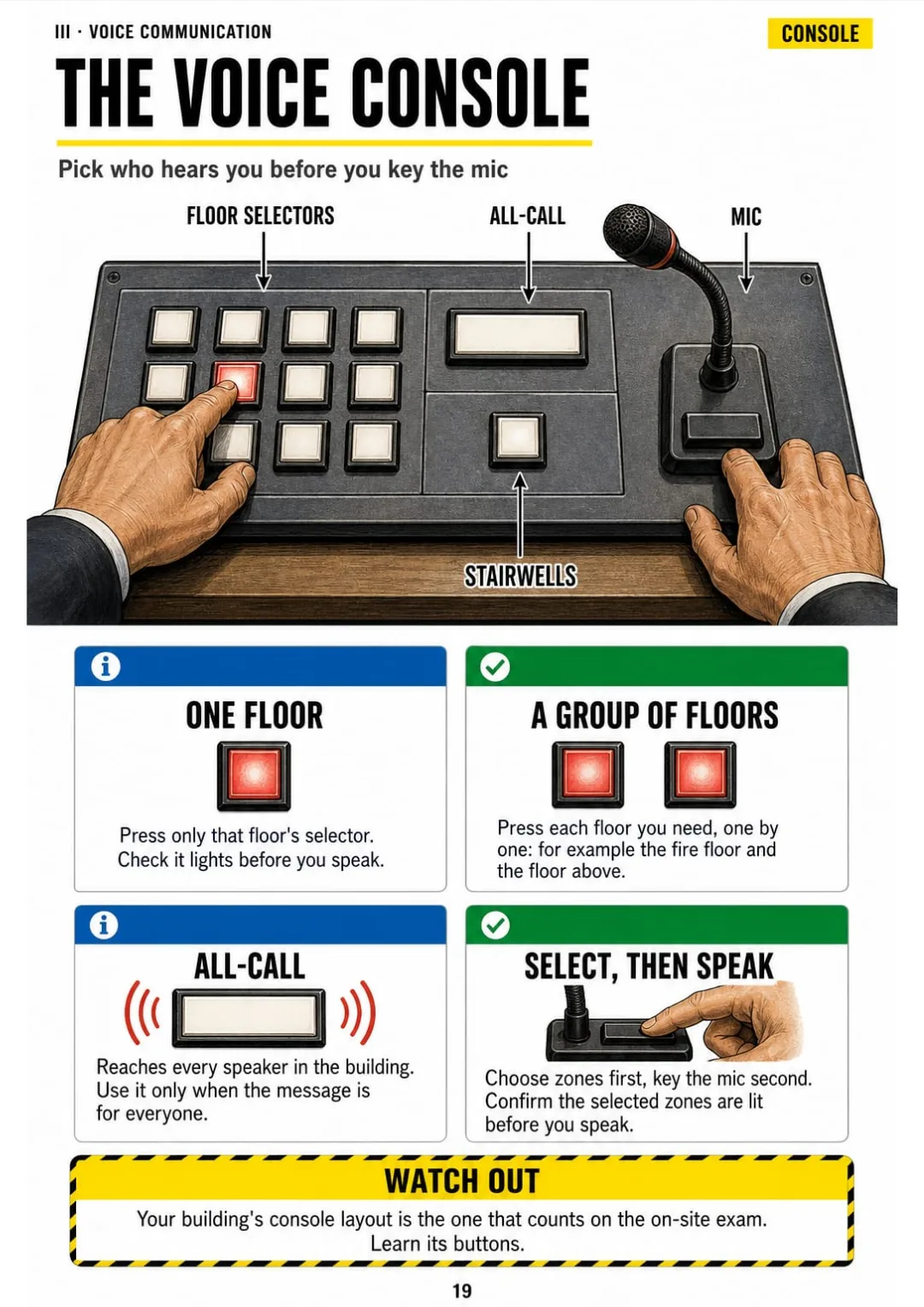
You're standing at the voice console in your fire command center. The examiner says, “Smoke on 14. Make the announcement.” You know you've read this, but your hand stops over the floor selectors.
The binder covers the console in pages of running text: zones, selectors, all-call, stairwell speakers, press-to-talk. Paragraphs about buttons don't tell you which one to press first.

In the book, the console is one drawing: the floor selectors laid out in a grid, the all-call switch, the stairwell selectors and the mic, each one labeled. Next to it, a box with who hears what: the fire floor, the floor above, the floors below.
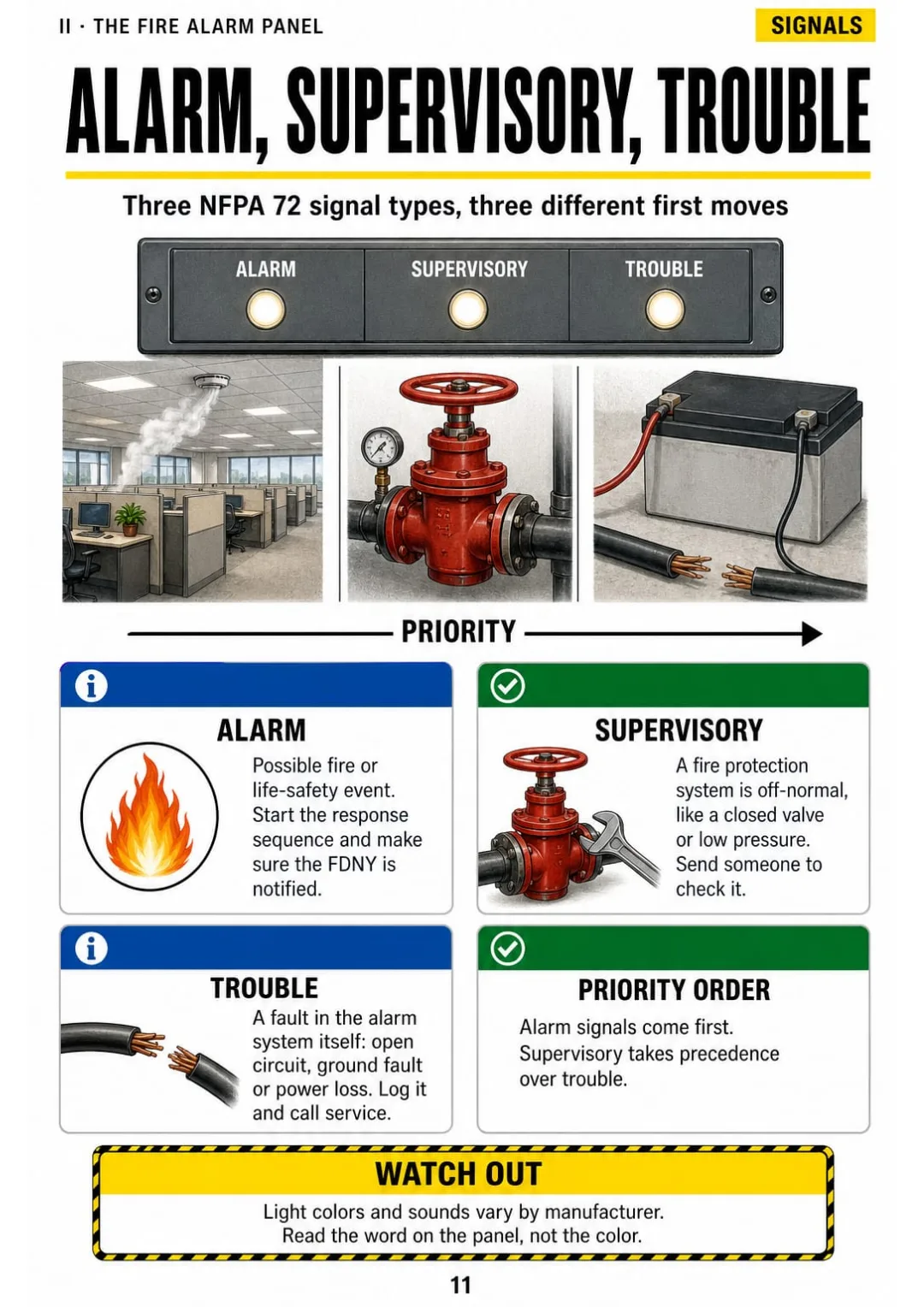
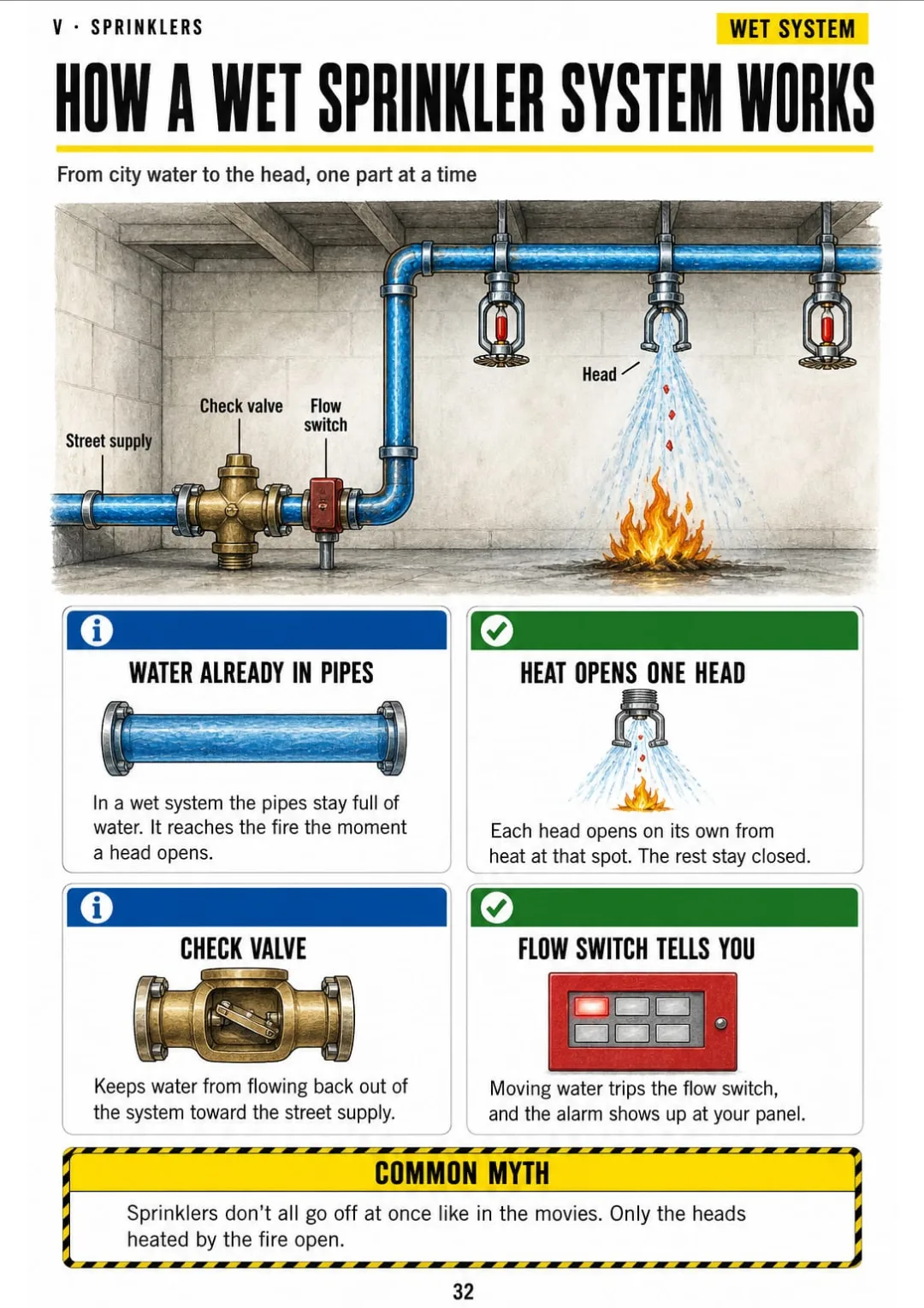
The rest of the book works the same way. Alarm vs. supervisory vs. trouble, Phase I and Phase II recall, the wet sprinkler riser, smoke climbing the shafts, Step 1 when the alarm comes in: each one has its own page.
So when you're at the console, the drawing is already in your head. You pick the floors, key the mic and say it in order, without going back to the binder.

The job and the room, the fire alarm panel, voice communication, elevators, sprinklers and standpipes, smoke and power, the fire response step by step, plans and drills, and the review before the exam: 65 pages, all illustrated.
Think of it this way:
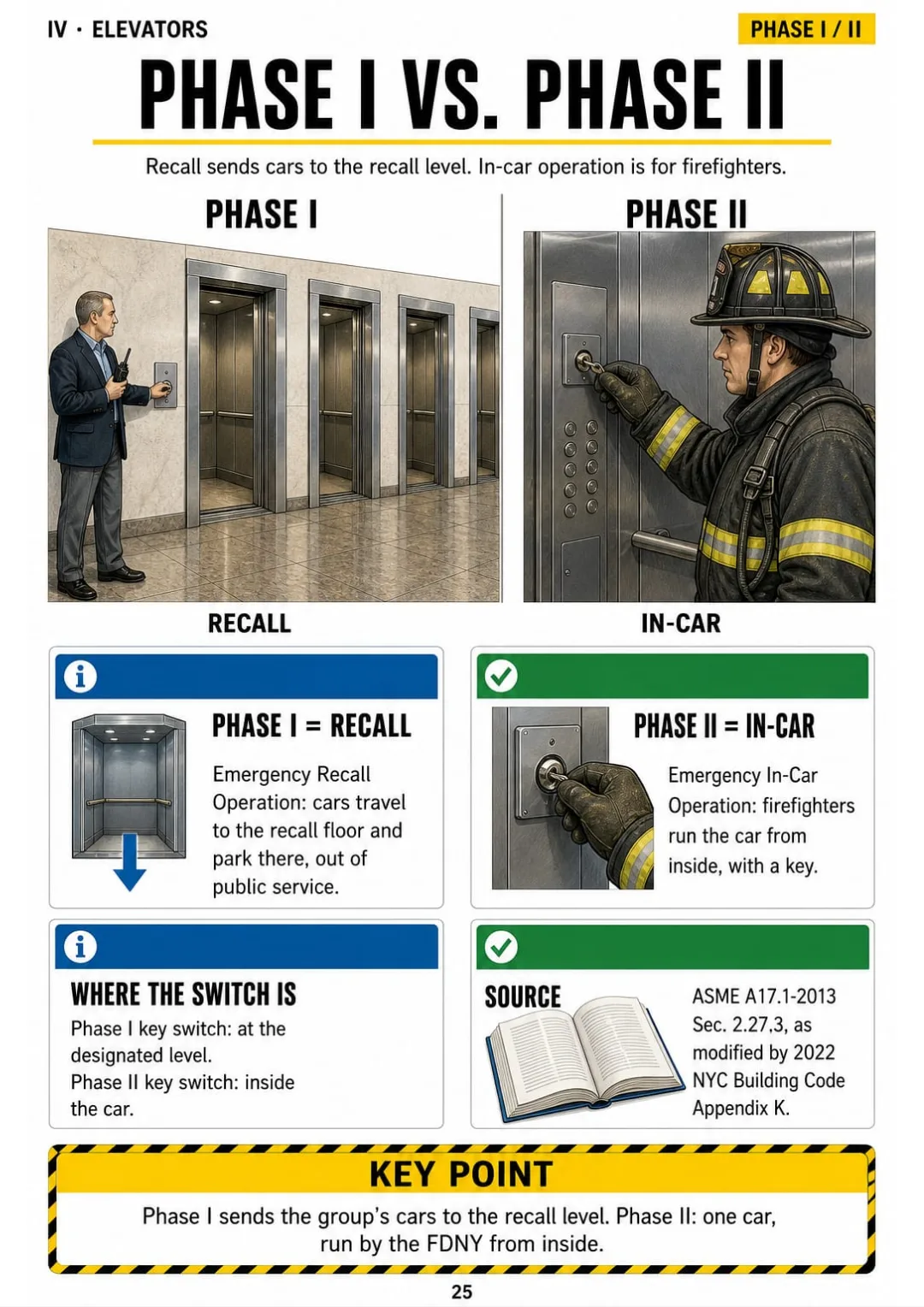
It's the on-site test. The examiner points at the elevator controls and says, “Firefighters are here. Elevators to Phase II.” You have a few seconds to say what you do, and in what order.
In the book, you open the Phase I vs. Phase II page and see it in one picture: Phase I is Emergency Recall, Phase II is Emergency In-Car Operation, with the in-car key positions OFF, HOLD and ON drawn right beside it.

Same with which floors you relocate first and where they go, the alarm panel signals, the voice console, the wet sprinkler riser and stair pressurization: each one on its own page, drawn the way it looks in a real building.
Fire Safety Director Illustrated is 9 parts and 61 topics, all drawn, and it ends with a review built for test day: the commonly confused pairs, the numbers to verify and the 6-step sequence on one page.
What you see drawn, you don't have to memorize.
What a director actually does, the certificate path from course to on-site test, which buildings need one, a map of the fire command center, the floor teams and the 6-step order used in the whole book.
Alarm, supervisory and trouble, reading the display, acknowledge-silence-reset, the devices that start an alarm, horns and strobes, your panel vs. the book's, verification and calling the FDNY.
The voice console, who hears what, the 4 parts of every announcement, warden phones, fire department phones and what to do when the voice system fails.
Phase I vs. Phase II, automatic and manual recall, designated and alternate level, the flashing firefighter's hat, OFF-HOLD-ON in the car, your elevator job and passengers trapped in a car.
The wet sprinkler system, control valves, waterflow alarms, standpipes, the Siamese connection, the fire pump and its signals, impairments and fire watch.
Why smoke is the first danger, HVAC shutdown and dampers, stair pressurization, fire doors and stairwell re-entry, emergency power, building plans and the key box.
The six steps from the first alarm to the log, in-building relocation, shelter in place vs. partial and full evacuation, occupants who need help and the all-clear.
What the fire safety plan must contain, running a drill, training floor wardens, the emergency action plan, bomb threat, active threat and lockdown, medical, gas leak and power failure.
What the examiner points at, the commonly confused pairs, the numbers to verify before test day, the 6-step sequence on one page and space for your own building's notes.
At the end of the book: A test-day review: the commonly confused pairs, the numbers to verify and the 6-step sequence on one page.

Test yourself topic by topic with exam-style questions and clear answers, so you find the gaps before exam day, not in front of the examiner.

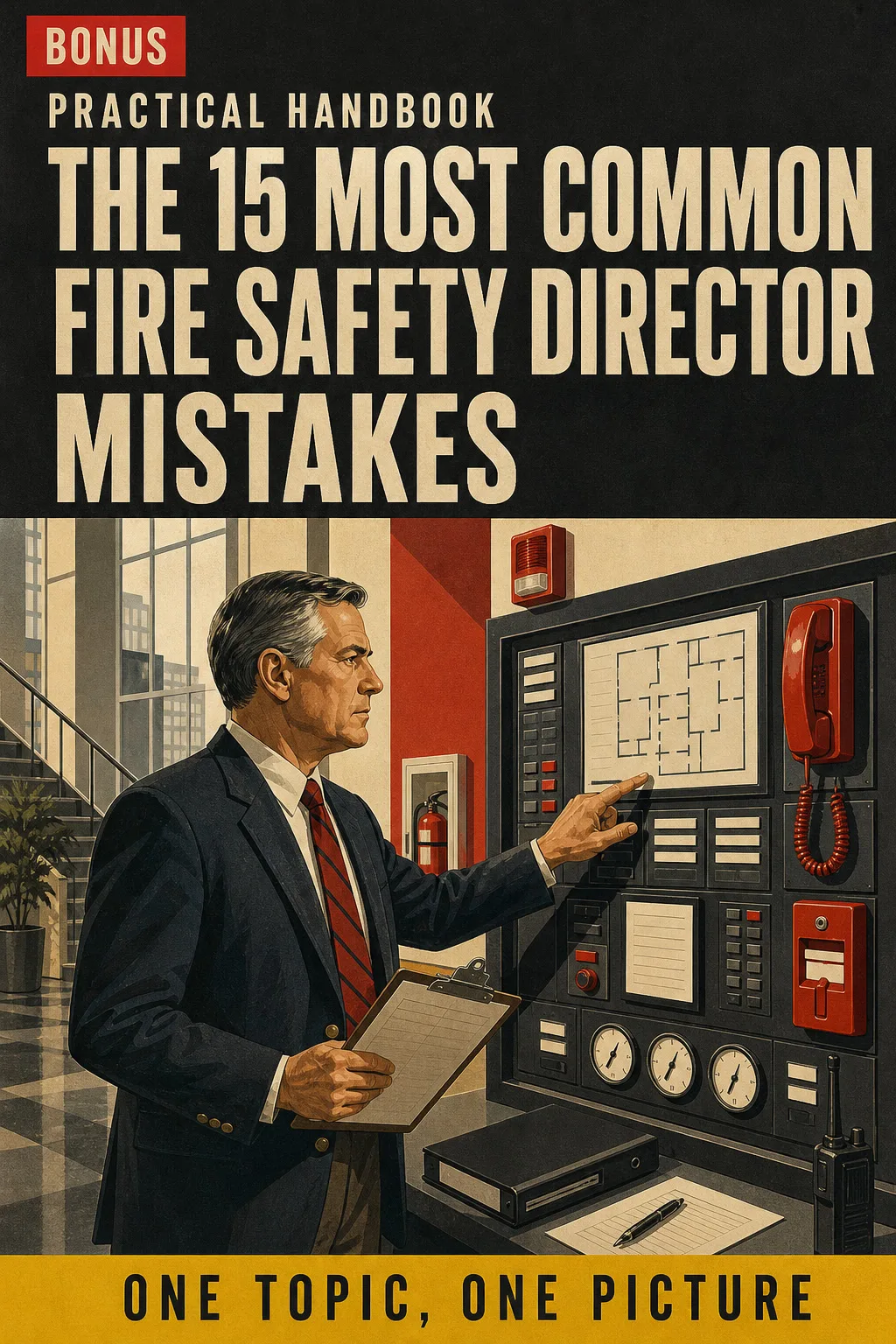
See the most frequent slip-ups side by side, before and after, from mixing up Phase I and Phase II to announcing in the wrong order, so you don't repeat them.
📄 This is a digital PDF book sent to your email: nothing is printed or shipped.
PDF by email: We email you Fire Safety Director Illustrated as a PDF, together with the two free books. It's a single payment: no installments, no extra charges.
One page per topic, so you can review one system on a break during your shift instead of rereading the binder at night.
Every response is a drawn sequence you can say out loud at your own panel: alarm, verify, announce, relocate, receive the FDNY, log.
A printed copy to keep at the fire command center and review before a drill, an inspection or training a new deputy.
📄 This is a digital PDF book sent to your email: nothing is printed or shipped.
Try Fire Safety Director Illustrated for 30 days, bonus books included.
We refund everything if the file won't open, if the book isn't what you see here, if you were charged twice or if the email doesn't arrive. Just email us.
You pay once. No subscriptions.
Yes. It's written for people who already know buildings: every topic is one drawing and a short box, in plain language. The panel is drawn generic, and one page shows how to match it to the panel in your own building.
From the official Fire and Life Safety Director study material and the New York City Fire Code, checked against NFPA 72 for alarm signals and ASME A17.1 for elevator operation. Where a number depends on the code edition, the page marks it so you can confirm it against your course material.
No. It's an independent study companion, not affiliated with or endorsed by FDNY or any agency or exam body. It follows the NYC Fire and Life Safety Director certificate and the NYC Fire Code. If your city uses a different exam, the panel, elevator and sprinkler pages still apply, but the procedures follow New York City.
No. You still take the required course and use the official material. This book doesn't give you a certificate or count toward course hours: it helps you review, one topic per page.
No. They are exam-style questions written for this book, to help you find your gaps. They are not official exam questions.
The book and the 2 bonus books come as PDFs by email, to the address you enter at checkout. It's a one-time payment, nothing monthly. The PDFs are made to print, so you can keep a copy at the fire command center.
It's built around New York City: the FDNY F-89 Fire and Life Safety Director certificate, the NYC Fire Code and the on-site test at your building's fire command center. It is not a generic version from another state.
The binder gives you everything in running text. This book puts each topic on one page with one drawing: the panel signals, the voice console, the elevator key positions, the 6-step order. It's for reviewing what's in your binder, not replacing it.
You have 30 days. We refund everything if the file won't open, if the book isn't what you see on this page, if you were charged twice or if the email doesn't arrive: just email us.
No more rereading the binder with nothing sticking.
Phase I and Phase II, drawn side by side, so they finally stick.
You walk into the exam knowing where everything is.
Drawings make studying faster.
The book is right below.
One-time payment: US$ 27 · Guarantee: 30 days · PDF by email
YES, I WANT FIRE SAFETY DIRECTOR ILLUSTRATED FOR US$ 27📄 This is a digital PDF book sent to your email: nothing is printed or shipped.